
Soundscapes
In class this week we learned about soundscapes and incorporating sound, movement, and a theatrical element to analyze images. This is a great activity to increase movement in a class and to break up the monotony of sitting in a desk. Beginning with the end in mind, I looked through the PLOs from the grade 10 visual arts IRP and found these two which would work well with this activity; 1) develop and make images that deliberately engage varied combinations of the senses at ones. 2) demonstrate an awareness of characteristic similarities and differences among images from a variety of world cultures.
To extend the activity we did in class, I would introduce the topic of soundscapes just as we saw in class. I would focus on the students’ use of sound (or lack of sound, ie. pauses), movement, staging, and audience involvement. The students would be put in groups of three or four and each group would be asked to select a different world culture from a hat, for example; Coast Salish, Brazilian, Italian, Japanese, Maori, or British. The students would then be asked to find a landscape made by someone from that culture that represents that place in the world. Students would be allotted half a class to research where that place is, images that have been made to represent that culture, and/or the music from that culture. They would then use the information they learned to put together a representation of a landscape that they collectively chose. The representation should include movement, sound, and a tableau type representation of the image. The performing groups would be asked to conceal their images until the class had a discussion about the performance.
The performance discussions would focus on the elements of art and design so before we had the discussion, I would go over what those are with the class and how they could be represented with sound or movement, for example, a repetitive sound might represent repetitive elements like shapes. Perhaps movements that start out small and increase with speed and space might represent an imbalance in the image.
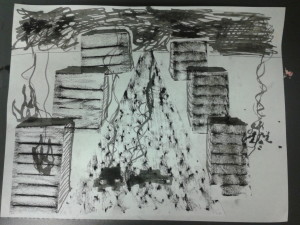
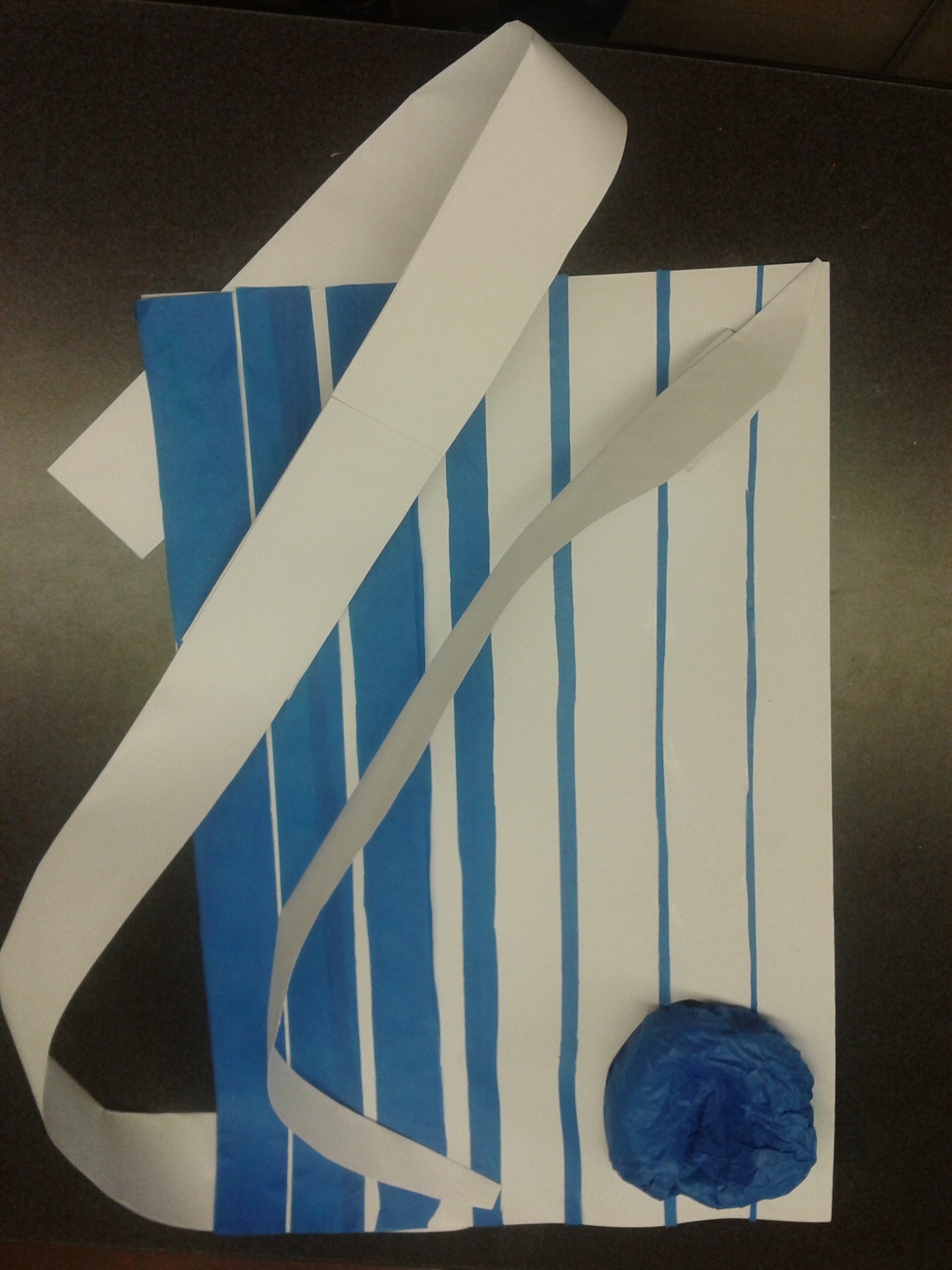
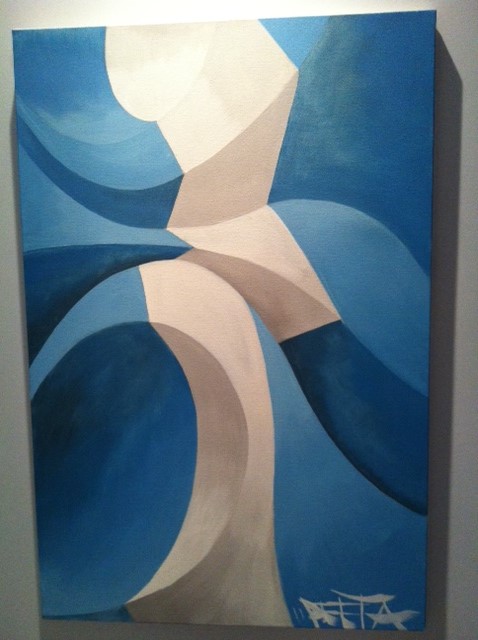
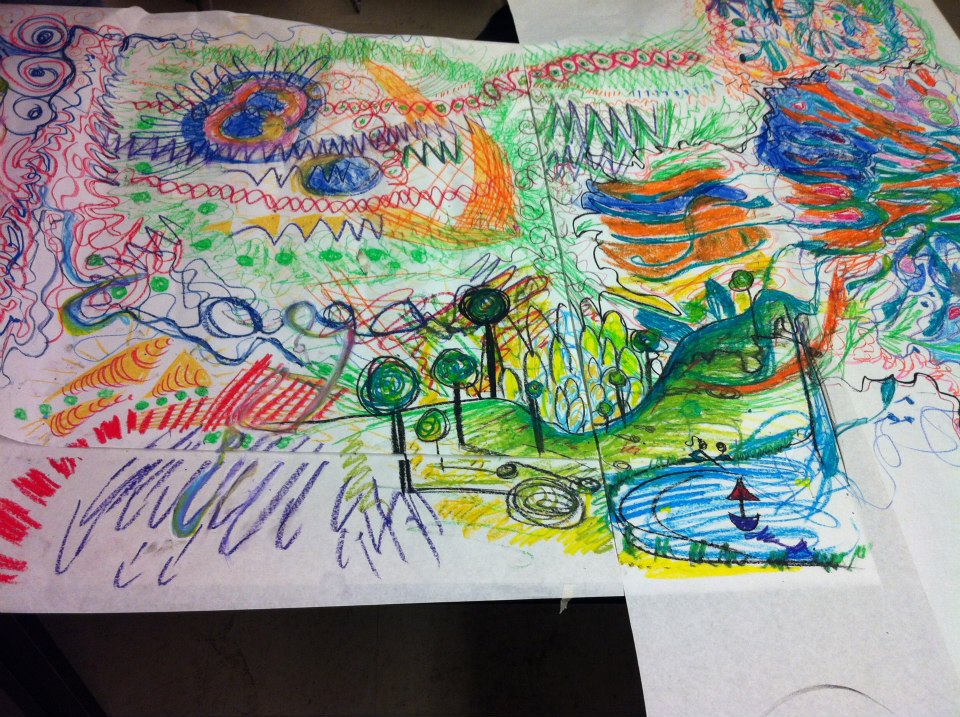
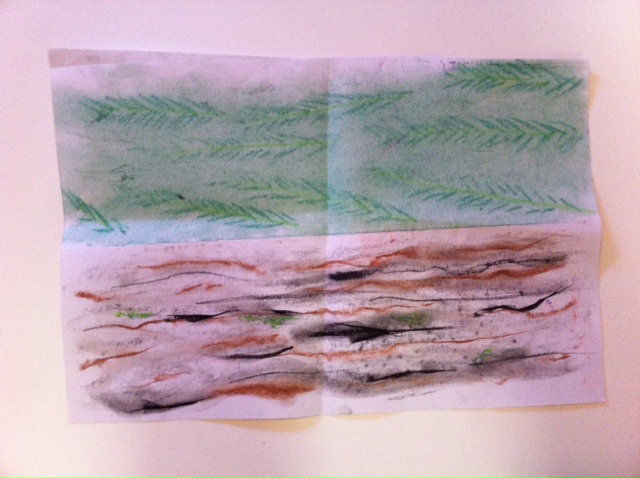
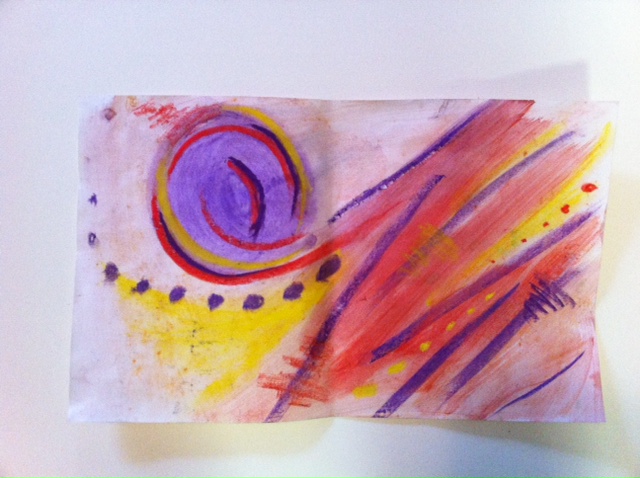
After this discussion about elements and principles of art and design, we would have the performances. A discussion would follow with a focus on the elements and principles. Students would be asked to imagine what the image looked like, what culture it represented and would be invited to make a drawn representation of one of the performances.
After all performances and drawn representations were completed, we would reveal the information regarding which culture was chosen to be represented and the students drawn analysis of the performances based on their understanding of the elements and principles of art and design.
For assessment, I would use the performances, and the drawn representations along with notes gleaned from the cultural research part of the assignment. Perhaps a good idea would be to have a handout that the students could answer about the culture they researched. They could then hand in this form and I would have written evidence of their learning. We could also do a 2 stars and a wish activity in the discussion section where a focus on representing the elements and principles of art and design in the analysis.
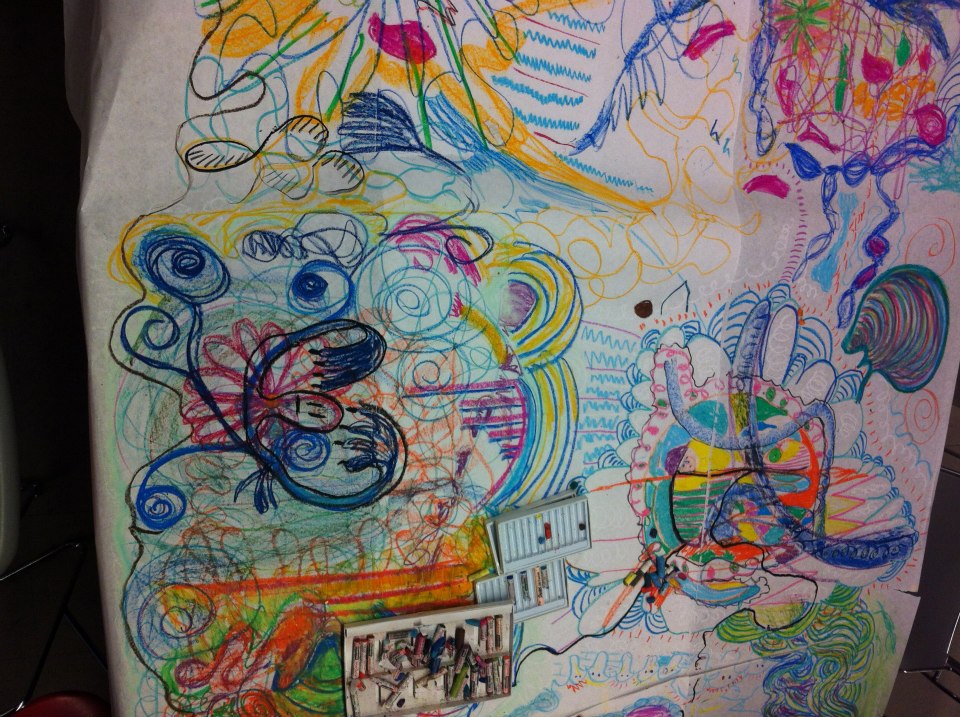
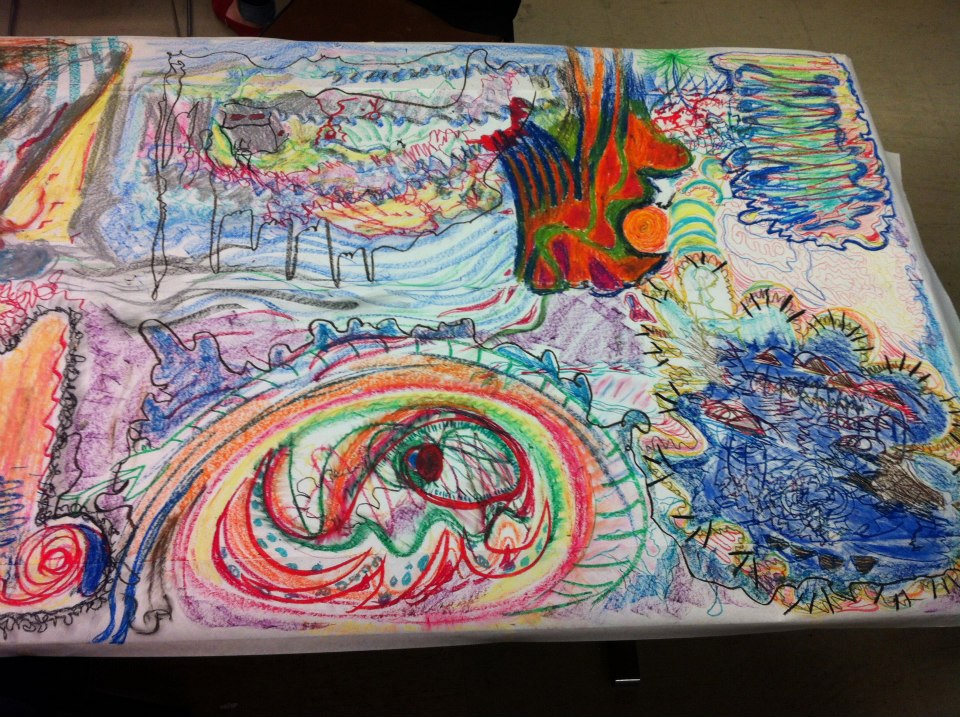
To check out some images of our performance, click on the link below. The file will download to your computer.


Recent Comments