Printmaking Techniques
This week in class we learned about 4 different printmaking techniques that can easily be incorporated into the art classroom; lino cut relief prints, Styrofoam relief prints, stamping, and tape resists. Printmaking is a techniques where a matrix or plate is created and then multiple images can be pulled from the plate. When a set of images is pulled it is called an edition. Some types of prints however are examples of monotypes, where only one image is made. An example of this is a tape resist. I had never done a tape resist before and I learned a lot from the process. For this reflection, let’s assume I am teaching the tape resist process to a grade 8 visual arts class.
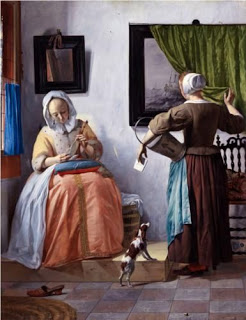
The theme or big idea of the lesson would be that artists can leave hidden messages in their pieces. As an introduction to this idea, we would look at some 17th century Dutch paintings which often display a painting within the painting. These images conveyed moralizing messages for the audience at the time by illustrating everyday scenes. However, in the scene, the viewer can read hidden messages through layered symbolism when reading the painting within the painting.
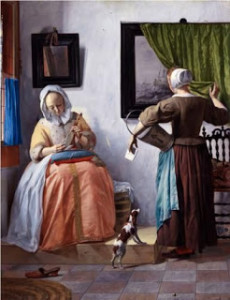
Woman reading a letter; Gabriel Metsu, 1664-1666
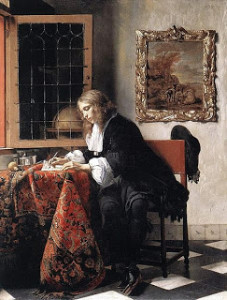
Man reading a letter; Gabriel Metsu, 1664-1666
Key vocabulary would be discussed in reference to these paintings such as symbolism, allegory, and embedded.
We would then brainstorm the idea of symbolism. One way to do this could be to show images of symbols that are common in today’s society; male/female bathroom signs, no smoking symbol, peace sign, heterosexual/ homosexual/ transgendered symbols, etc. We would then move on to some less obvious symbols that can be represented by some of the elements and principles of art and design. Colours, for example, have different cultural meanings and this would be discussed. We would discuss the implications of different line qualities and what they might symbolize. This could be dome in think/pair/shares or carousel questions where students rotate through different images or symbols that I have created and discuss what meaning they attach to it. There are no right or wrong answers to this activity as each person may attach a different meaning to a symbol based on their own personal experience.
After this, the students would have some sketchbook time where they individually brainstorm ideas of symbols that could represent them, their family, or their culture. To frontload this activity, I would ask they students to think about symbols that could represent a secret or a hidden message they would be willing to embed in their tape resist. I would explain that as the artist they have the artistic licence to completely embed or partially revel specific parts of their secret or hidden message. In the frontloading, I would show them the website postsecret.com. This is a website where people make small artistic postcard with their secrets embedded into the imagery or blatantly written out.
Next, the students would be introduced to the process of tape resists. I would show examples and ask if they know how the examples were made. In pairs the students would write an answer to the question, “why might tape resists be a good process for embedding secrets or hidden messages into an art piece?” Their answer is handed in so I can determine if everyone is catching on to the idea of layering and revealing. This question acts as formative assessment for the PLO in the visual art 8 IRP which states; identify contributions of processes and technologies to the meaning of an image and evaluate the appropriateness of their use.
In the following class, students would be asked to begin their tape resist images with embedded messages. At the end of the class, students would complete a short exit slip asking the following questions;
1) What are 2 examples of symbols embedded in your piece? This can be an obvious symbol like a peace sign or something less obvious like a colour or line quality. (You do not have to tell me what the symbol stands for or represents to you)
2) Briefly explain the process of tape resists.
3) You already answered the question, “why might tape resists be a good process for embedding secrets or hidden messages into your artwork?” Please tell me if your answer has changed, why or why not?
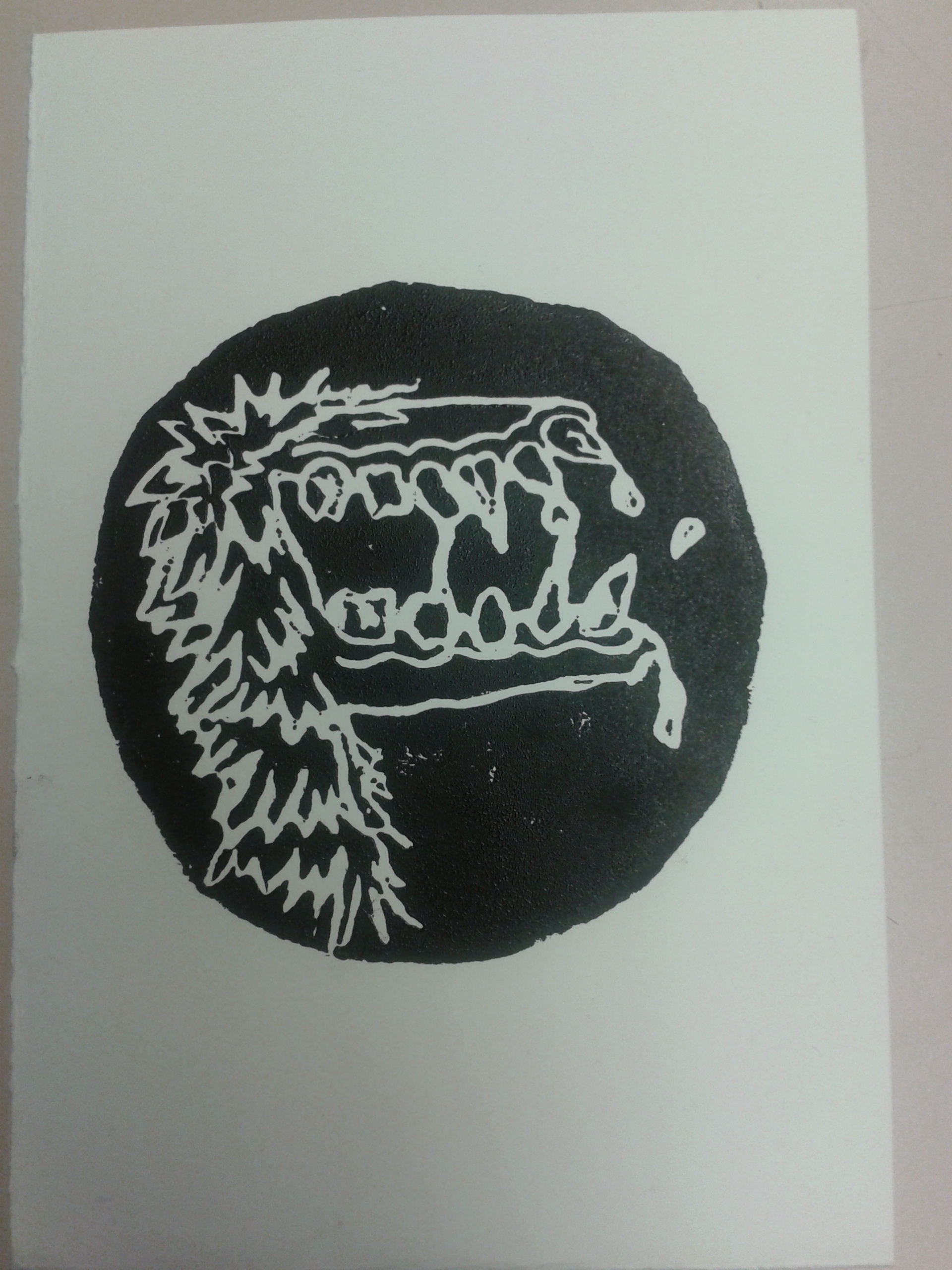
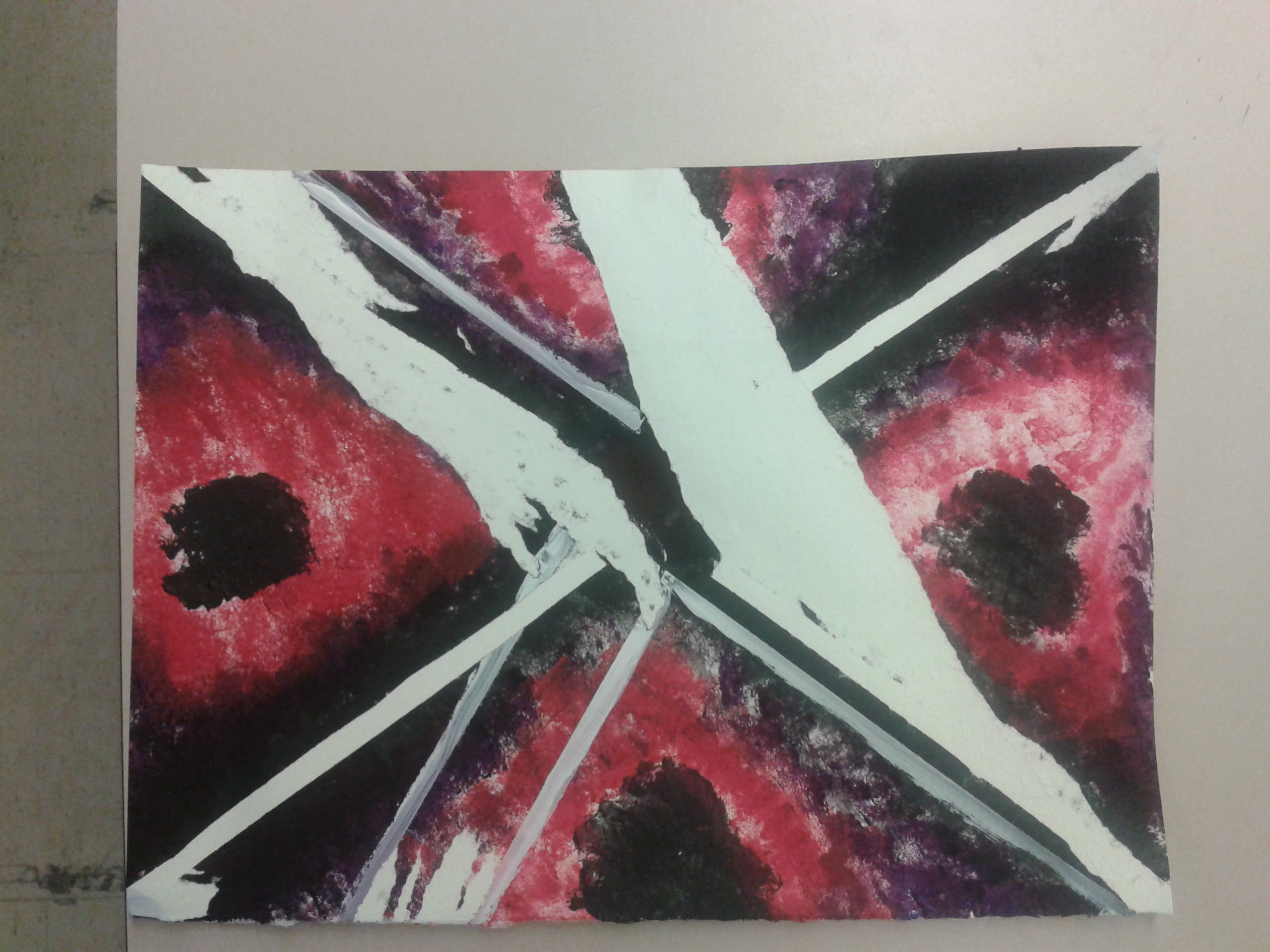
Here is an example of the tape resists I made in class and could use as an examples.
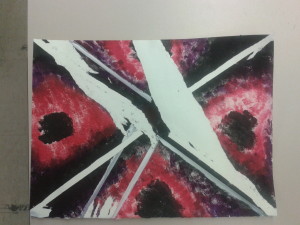
In this one, I discovered a few important things about the process. If you use good quality masking tape, your paper may rip as the adhesive is too strong. Painter’s tape (the green kind) is suitable for the process. Another possible contributing factor the paper ripping is the quality of paper used. I used printmaking paper which is lose and flexible. Try to use tightly compressed paper that is very smooth. Also, don’t get too impatient (like I did) make sure your paper and paint are completely dry.
The following is another example of printmaking that we didn’t explore in class but I have used for my own personal art as well as in a life skills classroom. It is easily differentiated and can be collaborative or individual.
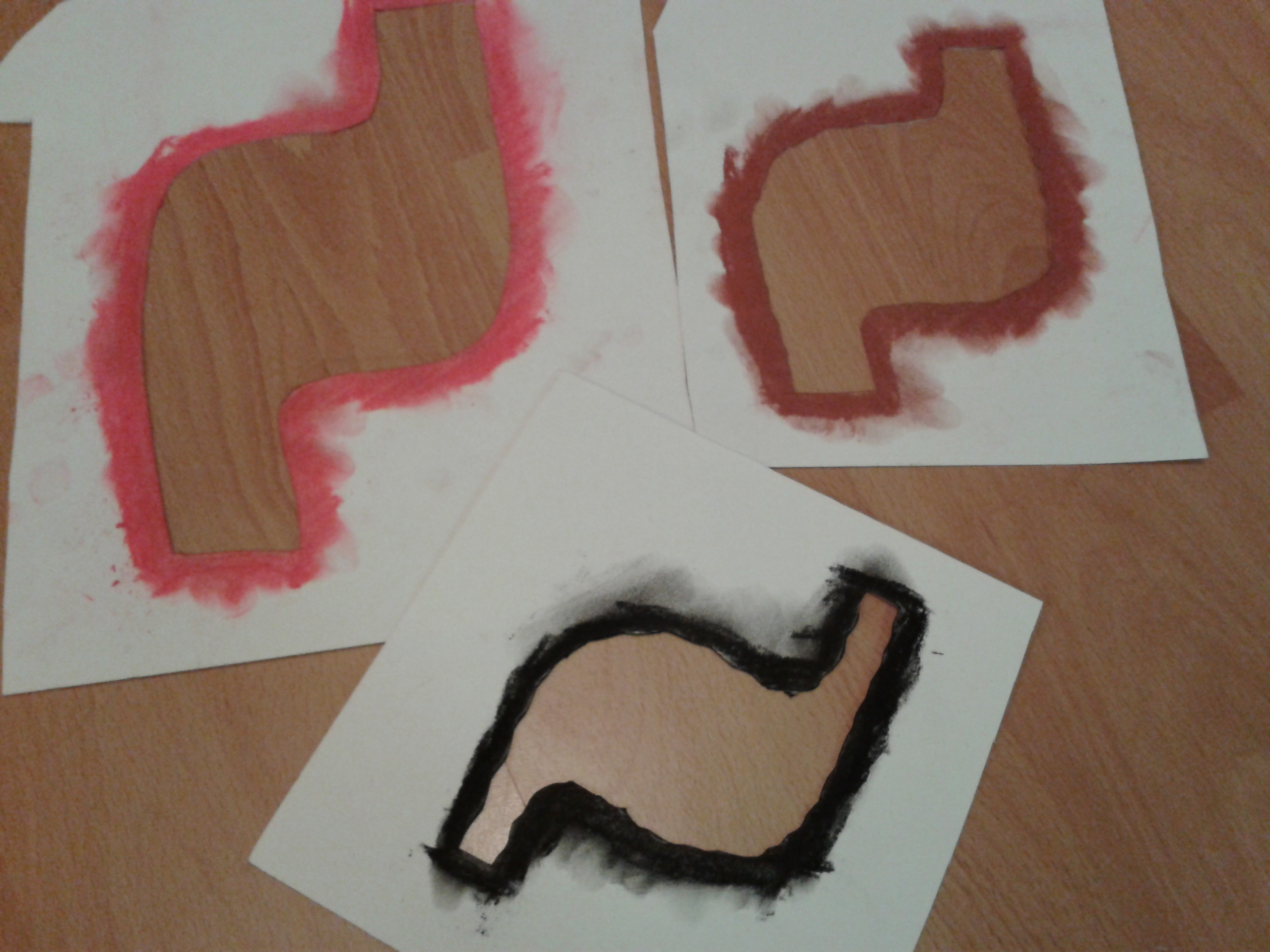
This is a form of stenciling. I haven’t done much research on the matter but I heard once that it is a technique used by certain Inuit Nations. In the process, you cut a stencil and colour around the outside of it with. In my example, I used chalk pastel but I have also used oil pastel. Other alternatives would be conte, charcoal, or any other smudgable substance.
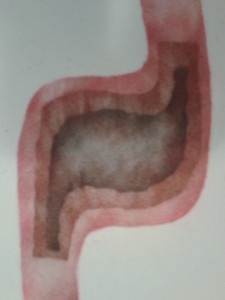
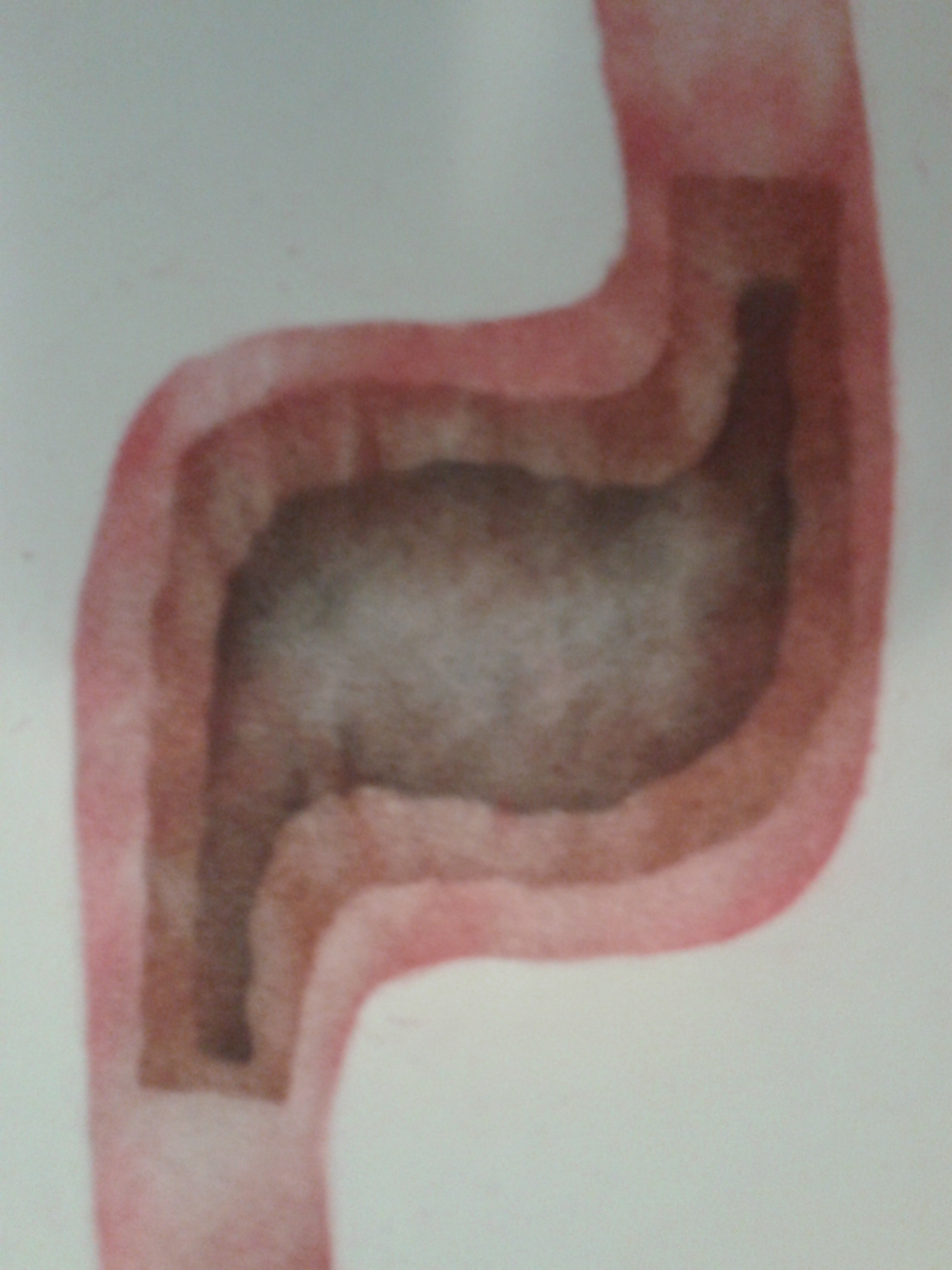
This is the final image. Can you guess how it’s made?
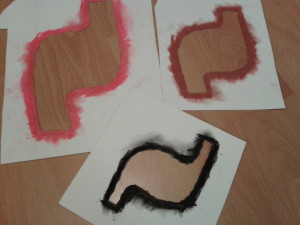
Stencils are cut first. Then you colour around the edges of the stencil. Place it on your paper and smudge inwards so that residue from your drawing implement smudges onto the paper. In this example I used the negative space stencil but you can also use the positive stencil and rub outwards. W word of caution: Be careful about the underside of your stencils. Sometimes they get messy and it can transfer to your good paper if you aren’t careful.

Recent Comments